Click here if you are having trouble viewing this message.
|
|
|
|
|
|
|
|
|
|
|
|
Hello Readers,
June was a big month for us. A new office, new recognitions, new collaborations, and enough technology to keep every team fully occupied until at least the end of the year. The kind of month where you look up on the last Friday and think right, a lot just happened.
But while we were busy growing, so was the landscape we work in.
June widened our understanding of what industries are
genuinely grappling with right now, not in theory, but in live programmes, real
constraints, and the specific questions that don't have easy answers. This edition reflects everything we've learned this month as a complete VE3, working across the public sector, health, housing, education, transport, and beyond.
We've also been out in the world. Events, roundtables, and conversations with the people shaping how technology gets adopted across the UK
public sector and enterprise. And we're proud to share that VE3 published new
research this month, work that we believe adds something real to the
conversation, not just noise.
Ten industries. The challenges they're navigating right
now. What's actually working. That's what follows.
Let's dive into it.
|
|
|
|
|
|
|
|
VE3 Recognised Among the UK's Top 50 in Both Technology Consulting and Cloud Services for 2026
|
VE3 has been recognised by Consultancy.org as a Top 50 UK consultancy in both technology consulting and cloud services as part of its comprehensive assessment of the UK consulting landscape. This acknowledgement reflects the trust our clients place in us and the standard our teams uphold on every engagement.
|
|
|
|
|
|
|
|
VE3 Secures Position on the Digital Outcomes and Specialists 7 Framework |
VE3 is pleased to announce its successful appointment to the UK Government's Digital Outcomes and Specialists 7 (DOS 7) Framework
managed by the Government Commercial Agency (GCA) |
|
|
|
VE3 Secures Position on the Technology Services 4 Framework
|
VE3 is pleased to announce its successful appointment to the UK Government's
Technology Services 4 (TS4) Framework
managed by the Government Commercial Agency (GCA) |
|
|
|
VE3 Secures Multi-Lot Appointment on HealthTrust Europe’s Payroll, HR, and Corporate Services Framework
|
VE3 is pleased to announce its appointment to the Payroll, HR, and Corporate Services Framework administered
by HealthTrust Europe LLP (HTE)
|
|
|
|
VE3 Appointed to the Workforce Transformation Solutions Framework Agreement
|
VE3 is pleased to announce its successful appointment to the
Workforce Transformation Solutions Framework Agreement
established by the Countess of Chester Hospital NHS Foundation Trust. |
|
|
|
|
|
|
|
|
|
AI-Powered Sub-surface Anomaly Detection
|
VE3 AI Research has published its latest research
paper, "A
Synthetic Data-Driven Framework for Sub-surface Anomaly Detection via Magnetic
Dipole Modeling and DBSCAN", exploring how synthetic data and unsupervised AI can
improve the detection of buried anomalies without requiring large, annotated
datasets.
|
|
|
|
|
|
|
|
|
|
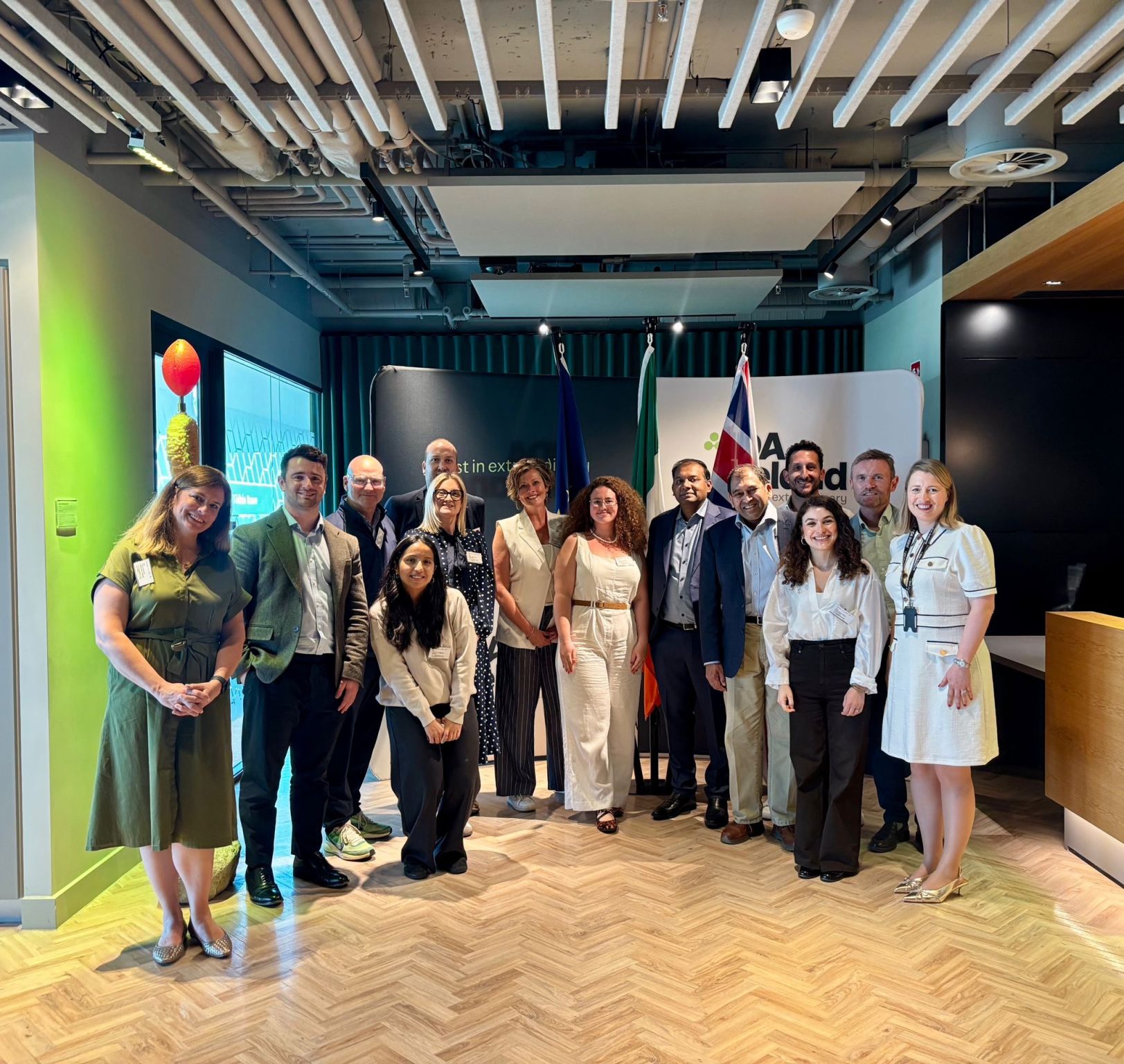
VE3 was part of techUK delegation to Ireland
|
|
A
fantastic three days in Ireland with a stellar cast of members for the techUK
delegation to Ireland 🇮🇪. Great to be part of the techUK delegation to Ireland
alongside such a strong group of members. The conversations with IDA Ireland,
Ibec and at Dublin Tech Summit really reinforced just how dynamic the Irish
tech ecosystem is right now!
|
|
|
|
|
|
|
|
London Tech Week is where the UK’s biggest businesses, most
creative innovators and smartest investors converge with global tech leaders.
For over 10 years it has been a meeting place where strategies are set,
policies are announced and business gets done.
|
|
|
|
|
|
|
|
VE3 Moves to the New UK Headquarters in Maidenhead, Marking a New
Chapter of Growth
|
|
VE3 is pleased to announce that its UK office has moved to a
new, larger premises at 18A King Street, Maidenhead, Berkshire. While the town
remains the same, the move marks a significant step forward, reflecting the
growth of the UK team, a busier project pipeline, and the expanding ambitions
of the business as a whole.
|
|
|
|
|
|
|
|
|
|
|
|
|
|
The governance frameworks exist. The ambition is real. What keeps stalling is the data infrastructure underneath, fragmented estates, sovereignty questions, and procurement models that weren't designed for the speed AI requires.
|
|
|
|
The Real
Barrier to Public Sector AI Adoption Isn't the Technology
|
Most public sector AI programmes stall for reasons that have
nothing to do with the model. This piece names the organisational, data, and
procurement barriers that explain the majority of failed deployments.
|
|
|
|
|
|
Responsible
AI in the Public Sector: A Governance Framework That Stands Up to Scrutiny
|
Generic responsible AI frameworks are easy to produce and
difficult to implement. This one is built specifically for public sector
accountability requirements, audit-ready, FOI-ready, and board-ready.
|
|
|
|
|
|
AI in Local
Government: A Practical Guide from Pilots to Scaled Capability
|
Local authorities have run more
AI pilots than almost any other part of the public sector. Very few have
scaled. This guide addresses exactly why and what the transition to
production actually demands.
|
|
|
|
|
|
|
|
|
|
Clinical time is the constraint. Documentation is where the waste is. AI is beginning to close the gap but only halfway. The ambient scribing and transcription tools are working in controlled settings.The harder problem, structured data output, clinical system integration, and governable records, is where the sector now sits.
|
|
|
|
Ambient
Scribing Solves Half the NHS Documentation Problem. The Harder Half Is Still
Waiting
|
Ambient AI scribing tools reduce documentation time
significantly when deployed. This article examines what the second half structured output, clinical integration, and governable records actually require.
|
|
|
|
|
|
AI
Transcription for Social Workers: Turning Conversations into Compliant Case
Records
|
Social work case recording is one of the most time-intensive
and least automated parts of adult social care. This piece examines how AI
transcription is beginning to change that and what responsible deployment
requires.
|
|
|
|
|
|
Harmonising
Healthcare: AI-Driven Patient Intake and Claims Auditing
|
Patient intake and claims processing share one structural
problem high volume, variable data quality, and manual review bottlenecks
that don't scale. This article maps where AI-driven harmonisation is making a
difference.
|
|
|
|
|
|
|
|
|
|
The enrolment cliff is structural. The CRM wasn't built for it. The reporting deadline won't move. Three simultaneous pressures: demographic contraction, systems that can't support a modern recruitment strategy, and HESA Data Futures pulling reporting timelines forward. Most institutions are addressing one. The ones moving fastest are addressing all three together.
|
|
|
|
The Enrolment
Cliff Is Here: What a Contracting Applicant Pool Means for Your Recruitment
Strategy
|
Demographic contraction is structural, not cyclical.
Universities responding with more marketing spend on the same CRM are solving
the wrong problem. This article reframes the enrolment strategy around a data architecture that works.
|
|
|
|
|
|
Why
Universities Need a Student Engagement Hub, Not Just a CRM
|
A CRM manages contacts. A student engagement hub
manages the full lifecycle from prospectus to alumni. Most universities are
trying to deliver the second from a system built for the first.
|
|
|
|
|
|
Beyond the
Annual Return: Modernising University Data for In-Year Reporting and
Forecasting
|
HESA Data Futures pulled higher education out of
comfortable annual reporting cycles. This article defines what modernisation looks like in practice, not in theory, for institutions still catching up.
|
|
|
|
|
|
|
|
|
|
Finance complexity, multi-entity structures, and the migration window that has to hold. Housing associations are under financial pressure, regulatory scrutiny, and a compliance calendar that leaves no room for disruption. ERP modernisation isn't optional but the way it's done determines whether the investment lasts or just creates a new set of constraints.
|
|
|
|
Oracle Fusion
ERP vs Legacy Finance Systems: The Business Case for Housing Providers
|
Legacy finance systems in social housing carry a
maintenance overhead and integration debt that rarely appears on a single
dashboard. This article builds the business case for finance
directors, not just IT.
|
|
|
|
|
|
How VE3
Delivered Oracle Fusion Finance Across a Complex Multi-Entity Housing Structure
|
A live delivery across distinct legal entities,
shared services, and separate statutory reporting requirements. This piece
details the architecture and programme decisions that made it work without
disrupting operations.
|
|
|
|
|
|
Migrating
Without Breaking Statutory or Peak-Season Reporting
|
The statutory reporting calendar does not pause
for a migration. This article defines the continuity-first approach VE3 uses
for every data migration with fixed external deadlines from parallel running
to go-live evidence.
|
|
|
|
|
|
|
|
|
|
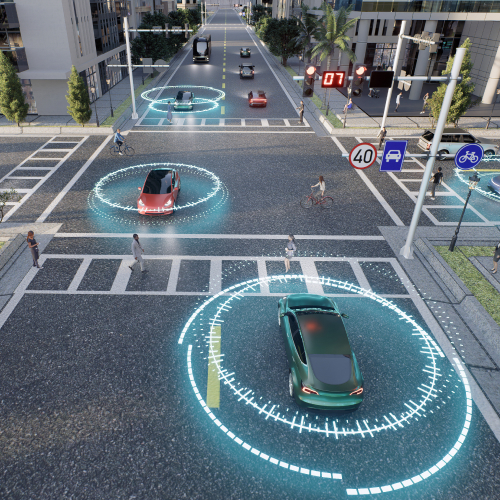
The policy direction is set. The data and interoperability foundation isn't yet
DfT's AI ambitions are unambiguous. What's less clear is how fragmented data estates, unresolved interoperability standards, and algorithmic accountability requirements get resolved before the infrastructure decisions become irreversible.
|
|
|
|
Why
Interoperability Is the Hidden Problem in AI-Enabled Transport
|
AI can optimise a route. It cannot fix the
fragmented data landscape that makes UK transport unnavigable by machine. This
piece maps exactly where data fragmentation prevents AI tools from delivering
on their stated capabilities.
|
|
|
|
|
|
Real-Time Decision Intelligence at the Gate: How
AI Handles Disruption in Airport Operations
|
When a flight delays, the downstream scheduling
implications cascade in seconds. This article examines how AI-driven decision
intelligence is changing how airports manage disruption and where the limits
still sit.
|
|
|
|
|
|
Autonomous
and Connected Transport: The Decisions DfT Can No Longer Defer
|
With the Automated Vehicles Act coming into full
effect, several infrastructure and data architecture decisions that have been
deferred are now on the critical path. This piece identifies what needs
resolving before deployment at scale.
|
|
|
|
|
|
|
|
|
|
UK retailers are sitting on more customer data than ever and converting less of it into loyalty than they should. This section explores the architecture, CRM gaps, and AI capability, closing the gap between data and genuine customer retention.
|
|
|
|
How
Mid-Market Retail Brands Are Using AI to Improve Customer Retention and
Lifetime Value
|
The retention tools once exclusive to enterprise
retailers are now accessible to mid-market brands. This article maps where AI
is delivering measurable results — and where the data foundations need work
first.
|
|
|
|
|
|
Your CRM Runs
Your Loyalty Programme. Your Customers Never See It. Here's What Closes the Gap
|
Most loyalty programmes are transactional
because the CRM underneath them was built for contact management, not behaviour
change. This piece defines the architecture that closes the gap between data
and genuine loyalty.
|
|
|
|
|
|
Loyalty as
Urban Infrastructure: The Business Case for City-Scale Behaviour-Change
Programmes
|
City-scale loyalty programmes are moving from
retail reward schemes to infrastructure for sustainable behaviour change. This
article makes the commercial and policy case for why transport operators are
uniquely positioned to lead.
|
|
|
|
|
|
|
|
Supply Chain & Manufacturing |
|
Trade compliance, multi-ERP complexity, and AI that only works when the data underneath it does. This section covers the foundational work UK supply chain and manufacturing organisations are doing to make operational intelligence production-ready.
|
|
|
|
The Supply
Chain That Saw It Coming: How AI Is Rewriting UK Trade Compliance
|
Export health certificates, customs
documentation, and trade compliance processes are bottlenecks that cost UK
businesses time and money at scale. This article examines where AI is finally
making them manageable.
|
|
|
|
|
|
Why
Explainable ML Is the Right Starting Point for Supply Chain Operations?
|
Black-box AI has no place on the shop floor.
This piece makes the case for explainable machine learning as the practical
foundation for supply chain AI and explains where generative AI fits once
that foundation exists.
|
|
|
|
|
|
Multi-ERP
Data Harmonisation as the Foundation for Supply Chain AI
|
Supply chain AI is only as reliable as the data
it reads across multiple ERP systems. This article addresses the harmonisation
problem sitting underneath almost every supply chain AI programme that has
stalled.
|
|
|
|
|
|
|
|
|
|
Exchange
Consolidation and Infrastructure Rationalisation: AI's Role in Smarter
Decommissioning
|
Exchange decommissioning is one of the largest
infrastructure programmes UK telecoms is running right now. This article
examines where AI-assisted rationalisation is reducing risk and where data
dependencies need resolving first.
|
|
|
|
|
|
|
|
|
|
How
Retrieval-Augmented Generation Removes Hallucination Risk in Regulated
Summaries
|
In regulated environments, a confident but wrong
AI output is a liability, not a UX problem. This article examines how RAG
architecture changes the risk profile and what retrieval quality conditions
make it dependable
|
|
|
|
|
|
|
|
|
|
Why Most
Power Platform Programmes Fail at the Start
|
The failure point in most Power Platform
programmes is not the automation, it is the assumptions made before the first
workflow is built. Governance model, licensing approach, environment strategy:
none of these are easy to revisit later.
|
|
|
|
|
|
|
|
|
|
Every
industry in this edition is sitting with the same underlying challenge not a
shortage of ambition, not a lack of investment, but the gap between a
well-written plan and something that actually works in production.
That gap has
a name. It's called delivery. And it's what we do.
|
|
|
|
|
|
|
|
|
|
|
|
|
|
|
|

.png)





.jpg)





.jpg)




























.jpg)